How Often Should You Pump a Septic Tank in Virginia?
Virginia septic pumping frequency explained: CBPA five-year rules, warning signs, costs, and how to protect your drainfield.
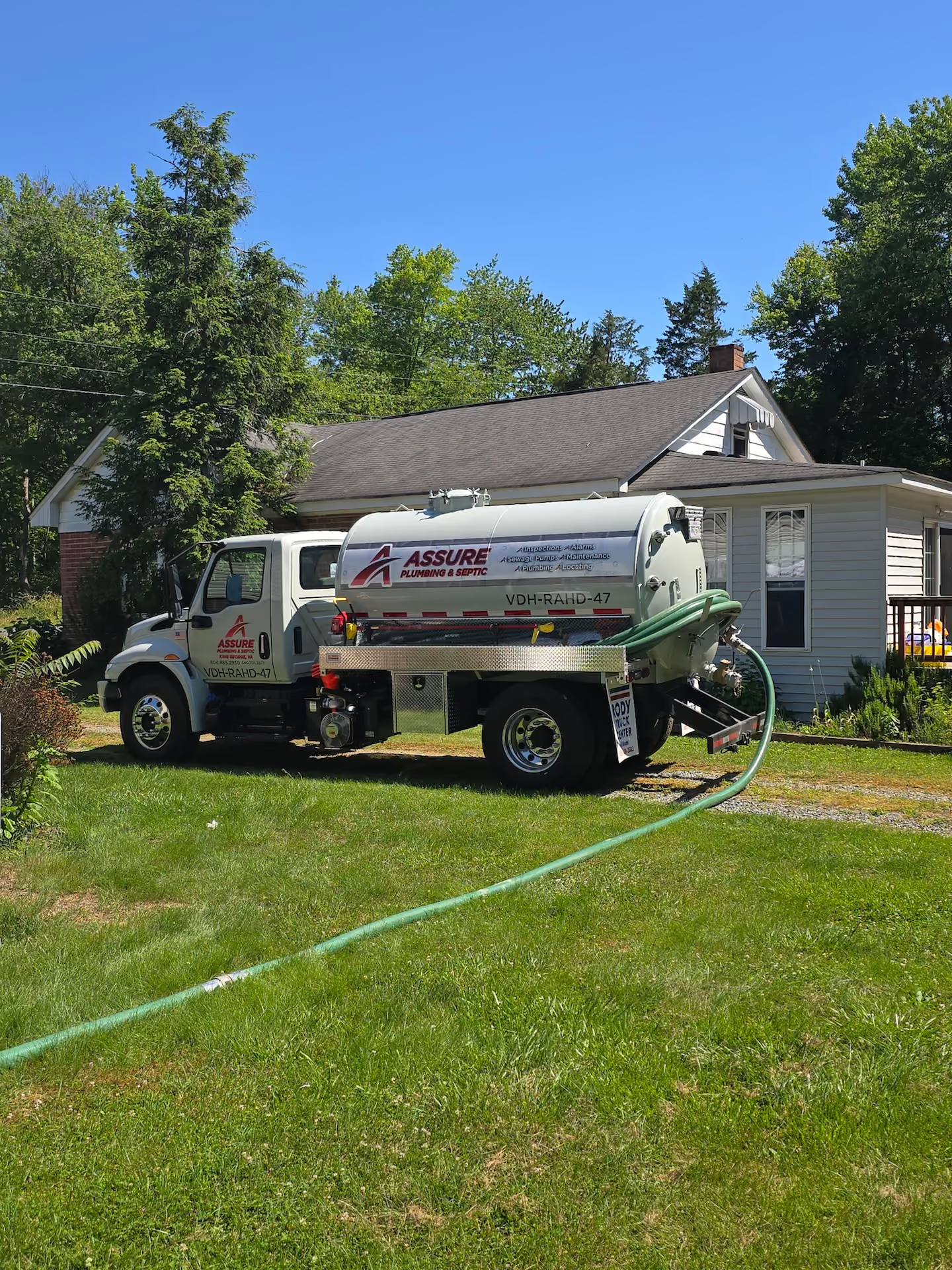
How Often Should You Pump a Septic Tank in Virginia?
Most Virginia homeowners should schedule septic tank pumping every three to five years. If your property sits inside a Chesapeake Bay Preservation Area, a five-year pump-out is not a suggestion — it is a legal requirement enforced by your county. Outside those boundaries, the interval depends on tank size, household headcount, and how hard you run your water.
We have been pumping septic tanks along the I-95 corridor between Stafford and Richmond for more than twenty years, and the single most common thing we hear on a first visit is some version of "I honestly have no idea when it was last done." If that is you, you are not in trouble yet — but you are overdue for a look.
This guide covers how the pumping interval is actually calculated, what the Virginia rules require, the warning signs that mean you should not wait for the calendar, and what a professional septic pumping visit involves.
Why Septic Tank Pumping Frequency Is Not One-Size-Fits-All
A septic tank is a settling chamber. Wastewater flows in, solids sink into a sludge layer at the bottom, and fats, oils, and grease float up into a scum layer at the top. The relatively clear liquid in the middle — the effluent — exits to the drainfield, where soil bacteria finish the treatment.
That design works beautifully until the sludge and scum layers grow thick enough to squeeze the clear zone out of existence. When that happens, solids start migrating into the drainfield. Drainfield soil is not designed to filter solids, and once it clogs, you are no longer looking at a $400 pump-out. You are looking at a drainfield replacement that can run into five figures.
So the real question is not "how many years has it been." It is "how fast are my layers building." Those factors drive the answer:
- Tank capacity. A 1,000-gallon tank fills its sludge layer roughly twice as fast as a 2,000-gallon tank serving the same household.
- Household size. Every additional person adds roughly 50–70 gallons of daily wastewater and a proportional solids load.
- Garbage disposal use. Ground food waste is suspended solids that head straight for your tank. Heavy disposal use can cut your interval nearly in half.
- Laundry patterns. Six loads on a Saturday pushes a hydraulic surge through the tank that can flush solids downstream before they settle.
- What goes down the drain. Wipes marketed as flushable, grease, paint, and harsh chemicals all shorten the life of the system.
What the Virginia Rules Actually Say
Virginia regulates onsite sewage under the Virginia Department of Health, and the framework is more organized than in many states. The Virginia Department of Health Onsite Sewage program sets the statewide standards, while licensing for installers, operators, and soil evaluators runs through the Department of Professional and Occupational Regulation.
The rule that catches the most homeowners off guard is the Chesapeake Bay Preservation Area pump-out mandate. Localities inside a CBPA are required to run a septic maintenance program, and property owners must pump out at least once every five years or have the system inspected and certified by a licensed operator instead. Several counties in our service area track compliance and mail reminder notices. Hanover County publishes its pump-out requirements and sends letters when your window comes due.
If you own an alternative onsite sewage system rather than a conventional gravity system, the requirements tighten considerably. Alternative systems carry operating permits with mandatory inspection schedules, and the work has to be performed by a licensed AOSS operator. We handle those systems too — see our alternative septic page for what that maintenance looks like.
For a plain-English overview of how conventional systems work and why maintenance matters, the EPA SepticSmart program is the best free resource we point clients toward.
Signs Your Septic Tank Needs Pumping Right Now
The calendar is your baseline. These symptoms override it:
- Slow drains throughout the house. One slow sink is a clog. Every drain slowing at once points at the tank or the line to it.
- Gurgling in the toilets or tub. Air is being forced back through the system because liquid cannot move forward.
- Sewage odor near the tank or drainfield. A healthy system is essentially odorless outdoors.
- Standing water or soggy ground over the drainfield. Effluent is surfacing instead of percolating.
- Unusually green, lush grass over the drainfield. Your lawn is being fertilized by untreated wastewater.
- Backups into the lowest fixtures. Basement floor drains and first-floor showers go first.
If you are seeing the last two, stop reading and call us. Surfacing effluent is a health hazard, not a maintenance item.
What Happens During a Professional Pump-Out
A proper pump-out is more than sucking out a tank. Here is our process:
- Locate and open the access. We uncover the manhole cover, not just the inspection port. Pumping through a four-inch port leaves solids behind.
- Measure the layers. Sludge and scum depths tell us whether your interval is right or needs adjusting.
- Pump the full tank. Liquid and solids both. A tank that is only skimmed will need service again far too soon.
- Backflush and break up the sludge. Compacted sludge at the bottom does not lift on its own.
- Inspect the interior. We check the baffles, the effluent filter if you have one, and the tank walls for cracks or deterioration.
- Report and document. You get the findings, and if your locality requires reporting, the record gets filed.
That inspection step is where we catch problems while they are still cheap. A failed outlet baffle costs a fraction of what a clogged drainfield costs. If we find something, our septic repair team can usually address it on the same visit or the next day.
Habits That Extend the Life of Your Septic System
Pumping on schedule is the foundation. These habits build on it:
- Flush only human waste and toilet paper. Nothing labeled flushable is actually flushable.
- Keep grease out of the drain. It solidifies in the tank and the line.
- Spread laundry across the week instead of stacking it in one day.
- Fix running toilets and dripping faucets promptly — excess water hydraulically overloads the tank.
- Keep vehicles and heavy equipment off the drainfield. Compacted soil cannot percolate.
- Do not plant trees near the drainfield. Roots find water and destroy pipe.
- Skip the additives. Your tank grows the bacteria it needs on its own.
That fourth item matters more than most people expect. A single running toilet can push hundreds of extra gallons a day through your tank, and leak repairs are one of the cheapest ways to protect a septic system.
Scheduling Septic Pumping in Spotsylvania County
We serve homeowners throughout Spotsylvania County and the surrounding I-95 corridor. Because we are a combined plumbing and septic operation, we can diagnose whether a problem is in your house plumbing or in the tank without sending you to a second contractor — which is a bigger deal than it sounds when your drains are backing up on a Friday afternoon.
Our septic license number is 1942001502, our plumbing and gas license is 2710068920, and you can verify both. That matters: Virginia requires licensing for this work, and the pump-out must be performed by a permitted hauler who disposes of septage at an approved facility. If you want to know more about who we are before you call, our about page introduces the team.
Frequently Asked Questions
How much does septic tank pumping cost in Virginia?
A standard 1,000-gallon residential pump-out typically runs $300 to $500 depending on tank size, access, and how much has accumulated. Tanks that have not been serviced in a decade sometimes require additional labor to break up compacted sludge. We give you the number before we start, not after.
How do I know if I'm in a Chesapeake Bay Preservation Area?
Contact your county government — most localities in our service area can check your parcel against the CBPA map while you are on the phone. Several counties, including Hanover, will also mail you a reminder letter when your five-year window is approaching. If you have ever received one of those notices, you are in a CBPA.
Can I pump my own septic tank?
No. Septage is regulated waste, and Virginia requires it to be hauled by a permitted operator and disposed of at an approved facility. Beyond the legal issue, septic tanks contain hydrogen sulfide and methane at concentrations that have killed people. This is not a DIY project under any circumstances.
Do septic tank additives reduce how often I need to pump?
They do not. A functioning septic tank cultivates the bacteria it needs from the waste stream itself. Some additives actually make things worse by suspending solids that should be settling, pushing them out to the drainfield. There is no product that removes the need for mechanical pumping.
What happens if I never pump my septic tank?
Solids eventually overflow into the drainfield and clog the soil's ability to absorb effluent. Once a drainfield fails, it generally cannot be restored — it has to be replaced, which requires permits, soil evaluation, and excavation. A few hundred dollars of maintenance prevents a repair that can exceed $15,000.
How long does a septic pump-out take?
Most residential pump-outs take 45 minutes to two hours once we are on site. Locating a buried tank on a property with no records can add time, which is why we recommend marking your access lids once we find them.
Ready to Get on a Schedule?
If it has been more than five years — or you genuinely do not know — it is time. Request a quote or call us at (540) 645-1351. We will pump it, inspect it, and tell you honestly when to have us back.
.avif)
Wayne Fishel
Owner of Assure Plumbing & Septic
Wayne Fishel is a seasoned professional with over 20 years of experience in the plumbing and septic industry. His dedication to quality service and customer satisfaction has made Assure Plumbing & Septic a trusted name in the Fredericksburg, Stafford, and Spotsylvania community.