Emergency Plumbing Checklist: The First 10 Minutes Before Help Arrives
A step-by-step checklist for handling a plumbing emergency: shut off water fast, and know when to call a licensed plumber.
Please Note: We do not offer emergency plumbing service as we respond during normal business hours.
Quick Summary
This guide walks through what to do in the first ten minutes of a plumbing emergency: shutting off your main water valve, handling a burst or frozen pipe, dealing with a failed water heater or a sewage backup, when to cut electricity or gas, and where the line falls between a homeowner fix and a call to a licensed plumber.
In a plumbing emergency, your first move is always the same: shut off the water at the main valve, then deal with the specific problem — burst pipe, overflowing toilet, failed water heater, or sewage backup. Knowing the shutoff location ahead of time is what actually protects your house.
What's the First Thing You Should Do in a Plumbing Emergency?
Stop the water at the source. That means finding your main shutoff valve — or the closest fixture shutoff, if the problem is contained to one sink or toilet — and closing it before you do anything else, including cleanup.
Water damage gets worse by the minute. A burst pipe or a failed supply line can put out gallons a minute, and once it's soaked into flooring or drywall, the repair has as much to do with materials and drying out the space as it does with the plumbing itself. Shutting off the water first buys you time to think clearly about the rest.
Where Is Your Main Shutoff Valve, and How Do You Use It?
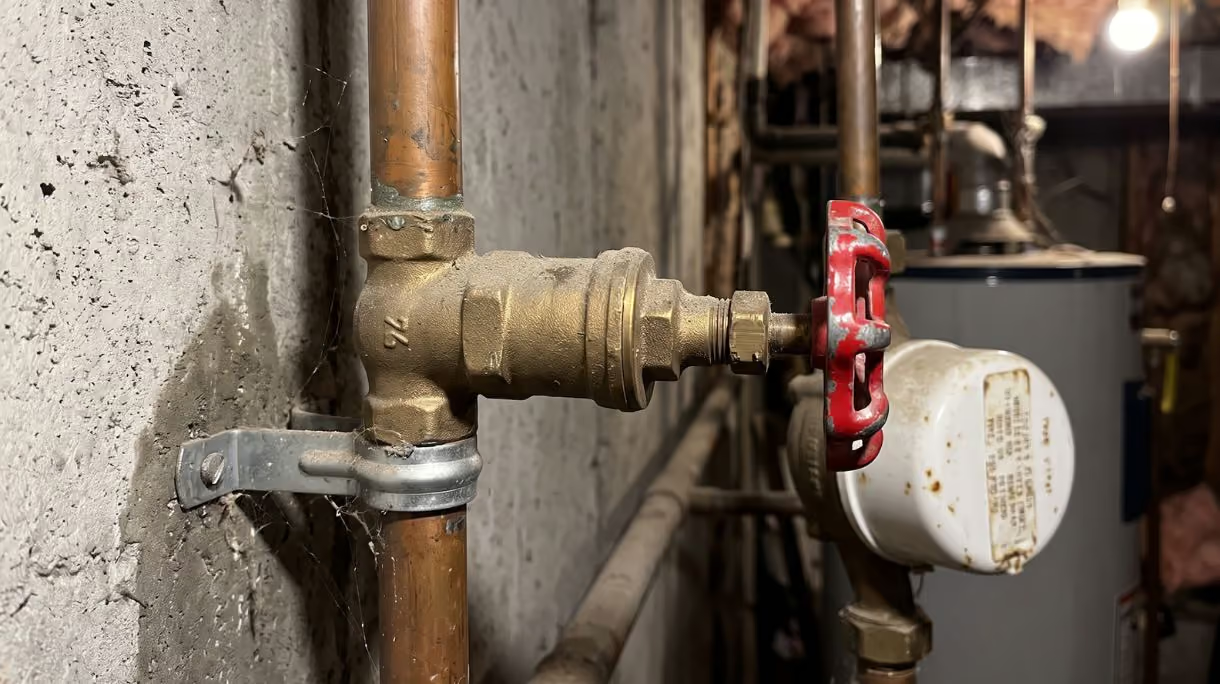
The main shutoff is usually near where the water line enters the house — a basement wall, a utility closet, a crawl space access point, or next to the water meter if you're on public water. On a private well, look near the pressure tank instead.
Most residential valves are a gate valve (a round handle, several turns clockwise to close) or a ball valve (a lever, a quarter-turn until it's perpendicular to the pipe). Find yours today, not during an emergency — gate valves that sit unused for years can seize or start leaking the first time you turn them, so it's worth exercising the valve once a year.
What Should You Do About a Burst or Frozen Pipe?
Shut off the main valve immediately, then open the nearest faucet to relieve pressure and drain the line. Contain a visible burst section with towels or a bucket while you wait, but don't try to patch a pressurized line yourself.
Freeze-related bursts are a real seasonal issue here. Homes in Fredericksburg, Stafford, and Spotsylvania see enough freeze-thaw swings each winter that pipes in unheated crawl spaces, garages, or exterior walls are genuinely at risk, especially in older housing with less insulation around those runs. Stafford County's own guidance recommends keeping a home no lower than 55°F when you're away in freezing weather, and running a trickle from the faucet farthest from the main valve during a hard freeze, since moving water is far less likely to freeze. It's also worth knowing your water utility typically maintains the main up to your meter — everything past that is yours.
What Do You Do When Your Water Heater Fails or Leaks?
Shut off the cold-water supply valve on top of the unit first — that stops it from refilling. Turn a gas control knob to "off," or cut the dedicated breaker on an electric unit, but only if you can reach the panel without standing in water.
A leak from a fitting or the drain valve is often a simple repair. One coming from the tank body itself, rusted through at the bottom, usually means the tank has failed and needs replacement rather than a patch.
What If Sewage or a Drain Is Backing Up?
Stop using water anywhere in the house right away. Don't flush toilets or run sinks, the dishwasher, or the washing machine — any of those can push more water into an already-blocked line and send it back out the lowest drain. Keep kids and pets away from the affected area; this is a contamination issue, not just a mess.
A plunger or basic drain snake usually can't reach far enough to matter here. A backup affecting more than one fixture at once — a toilet and a tub, or multiple floor drains — almost always points to a blockage in the main line, which needs professional camera and cabling equipment to clear.
Should You Cut the Electricity or Gas Too?
If water is pooling near outlets or a panel, cut power to that area at the breaker — only if you can reach it without stepping in the water. When in doubt, leave it and call an electrician or plumber instead.
If you smell gas anywhere near a water heater, furnace, or gas line, leave the house without flipping any switches and call your gas utility from outside once you're clear. That one isn't a wait-and-see situation.
The First 10 Minutes: A Step-by-Step Checklist
- Shut off the main water valve, or the nearest fixture shutoff for a contained leak.
- Open a low faucet to relieve pressure and drain the line.
- If water is near outlets or a panel and it's safe to reach, cut power to that area.
- If you smell gas, skip the rest and get out of the house.
- Contain what you can with towels or a wet/dry vacuum — but not sewage.
- Stop all water use if the issue is a drain or sewage backup.
- Photograph the damage for insurance before cleanup.
- Move furniture, rugs, and electronics away from standing water.
- Note when the problem started — a plumber will ask.
- Call a licensed plumber for anything beyond a simple, visible fix.
When to Call a Licensed Plumber
Plunging a clogged toilet, tightening a loose supply line, or resetting a tripped GFCI outlet are reasonable for a homeowner to handle. Sewage backups, gas odors, a water heater leaking from the tank body, a burst pipe inside a wall or slab, or anything requiring you to cut into finished space are jobs for a licensed plumber, since those carry either sewage exposure or a real risk of making the damage worse.
A problem that keeps recurring — a drain that clogs every few months, a pipe that's frozen twice in two winters — points to an underlying issue a repeat DIY fix won't solve. Homes throughout Fredericksburg, Stafford County, Spotsylvania, Caroline County, King George County, and Culpeper each carry their own mix of older piping, private wells, and public water systems, and a plumber who knows the local housing stock finds the root cause faster than trial and error.
Frequently Asked Questions
How do I find my main water shutoff valve if I've never used it?
Start where the water line enters the house — a basement wall, crawl space access, or a utility closet near the water meter. On a well system, check near the pressure tank. If you can't find it, your water utility or a plumber can usually locate it in a few minutes so you have it marked for next time.
Is it safe to use a wet/dry vacuum on a sewage backup myself?
No. Sewage carries bacteria and contaminants that need proper containment and disposal, and a shop vacuum isn't equipped to handle that safely. Stop using water in the house, keep people and pets away from the area, and call a plumber to clear the blockage.
Why do older homes in Fredericksburg and Stafford freeze more often?
Older construction often runs supply lines through unheated crawl spaces, garages, or exterior walls without the insulation standards used in newer builds. Combined with the freeze-thaw swings typical of a Central Virginia winter, those runs are more exposed to a hard freeze than pipes run through conditioned interior space.
What's the very first thing I should do if I smell gas near my water heater?
Leave the house immediately without flipping any light switches or unplugging anything on your way out. Call your gas utility or 911 from outside once you're at a safe distance, and don't go back in until they tell you it's clear.
.avif)
Need asssitance with a plumbing issue?
Contact Assure Plumbing today if you need assistance with any plumbing issues. We are experts at this plumbing stuff and serve Stafford down to Richmond.